Posts

Showing posts with the label #stretches

Benefits of Private Pilates and Group Pilates Classes

Image
  Both private and group Pilates classes can be effective—they simply emphasize different benefits. The better choice depends on your goals, experience level, budget, and preferred learning style. Private Pilates Group Pilates Personalized instruction tailored to your body and goals More affordable per class Faster progress because every exercise is customized Motivating social atmosphere Ideal for beginners who want to learn proper technique Builds consistency through a regular class schedule Helpful for injury recovery or working around physical limitations (with medical clearance if needed) Variety in workouts and instructors Immediate feedback and hands-on cueing (where appropriate and with consent) Encourages community and accountability Flexible pace—you can spend more time on challenging movements Great for maintaining general fitness Benefits of private Pilates Customized workouts:  Every session is designed around your fitness level, posture, mobility, strength, and g...

Every Day Stretch Routine

Image
  A daily stretching routine can help maintain mobility, reduce stiffness, improve posture, and support long-term joint health. You don't need an hour—5 to 10 minutes is enough for most people. 1. Neck Stretch Targets: neck and upper traps Gently tilt your ear toward your shoulder. Hold 20–30 seconds per side. Avoid pulling hard on your head. 2. Chest Opener Targets: chest and front shoulders Clasp your hands behind your back and gently lift them. Or stand in a doorway with your forearms against the frame and lean forward. Hold 20–30 seconds. 3. Cat-Cow Targets: spine mobility Start on hands and knees. Alternate arching and rounding your back slowly. Perform 8–10 repetitions. 4. Hip Flexor Stretch Targets: front of hips Kneel in a lunge position. Shift your weight forward while keeping your torso upright. Hold 20–30 seconds per side. 5. Hamstring Stretch Targets: back of thighs Sit with one leg extended or place your heel on a low surface. Hinge forward from the hips. Hold 20–30 se...

Pilates For Tight Hamstrings

Image
  Tight hamstrings are  very  common in Pilates clients, and Pilates is great for lengthening them  without over-stretching  by emphasizing pelvic position and eccentric control. Below is a  balanced sequence  you can use for yourself or clients, moving from gentle → more loaded. Key cues first (important) Before stretching, always check: Neutral vs posterior pelvic tilt  – many “tight hamstrings” are actually a tucked pelvis. Encourage  hip hinge , not spinal flexion. Think  lengthen from sit bones through heels , not “pull on the legs.” Best Pilates Exercises for Tight Hamstrings 1.  Pelvic Curl (Bridge) Mobilizes + eccentrically lengthens hamstrings Articulate the spine up and down Emphasize the  slow lower Cue sit bones reaching toward knees at the top 👉 Progression: heels farther away or on a ball 2.  Single Leg Stretch (Tabletop or Long Lever) Dynamic length without static strain Keep pelvis neutral Extend the leg...

Difference Between Pilates and Yoga

Image
  Pilates vs. Yoga  — both are mind-body practices that improve strength, flexibility, and focus, but they differ in origin, approach, and goals. Here’s a breakdown of the key differences: 1. Origin Yoga : Ancient practice from India, dating back thousands of years. It has spiritual, philosophical, and physical components. Pilates : Developed in the early 20th century by Joseph Pilates to help injured soldiers and dancers recover. It’s primarily physical and rehabilitative. 2. Focus Yoga : Focuses on flexibility, balance, breath control ( pranayama ), and mental clarity. Often involves meditation and mindfulness. Pilates : Focuses on  core strength , posture, and alignment. It’s more fitness-oriented, with emphasis on controlled movements. 3. Movement Style Yoga : Involves holding poses ( asanas ) and flowing through sequences (like  vinyasa ). Movements can be static or dynamic. Pilates : Involves small, precise, repetitive movements, often targeting specific muscle...

How Many Minutes of Movement Count?

Image
  How many minutes of movement do we need to maintain a healthy lifestyle? Health experts generally recommend  at least 150 minutes of moderate-intensity movement per week  to support a healthy lifestyle. That breaks down to: 30 minutes a day, 5 days a week  of activities like brisk walking, cycling, Pilates, or swimming. Alternatively: 75 minutes of vigorous activity per week  (like running, HIIT, or fast cycling). On top of that, for best health, it’s also recommended to include: Strength training  at least  2 days per week  (Pilates, weightlifting, resistance bands, or bodyweight exercises). Flexibility and balance exercises  (like stretching, yoga, or Pilates) a few times per week to reduce injury risk and improve mobility. 💡 Even light activity (like standing, walking around the house, or taking the stairs) adds up and is much healthier than long periods of sitting. Join us here at Jupiter Massage and Pilates any day of the week to get ...

Pilates Hip Opener Exercises

Image
  Here are some effective  Pilates-based hip opener exercises  that can help increase mobility, release tension, and improve alignment in the hips: 🧘‍♀️  1. Hip Rolls (Pelvic Curl) Focus:  Opens front of hips, strengthens glutes and hamstrings How to: Lie on your back with knees bent, feet hip-width apart. Inhale to prepare. Exhale as you tilt your pelvis and roll your spine up into a bridge. Inhale at the top, exhale to roll down slowly. Repeat 8–10 times. 🧘‍♀️  2. Supine Figure Four Stretch Focus:  Opens external rotators and piriformis How to: Lie on your back and cross your right ankle over your left thigh. Grab behind your left thigh and gently pull it toward your chest. Hold for 30 seconds, then switch sides. 🧘‍♀️  3. Side-Lying Leg Circles Focus:  Strengthens hips while improving mobility How to: Lie on your side, legs extended. Lift your top leg slightly and make small controlled circles. 5–8 circles in each direction, then switch ...

Pilates Exercises for Tight Hamstrings and Quads

Image
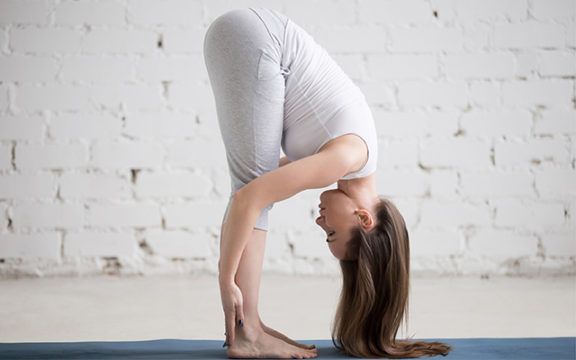
  Tight hamstrings and quads can lead to poor posture, lower back discomfort, and limited mobility. Pilates is excellent for lengthening and strengthening these muscles in a controlled, mindful way. Here are some effective  Pilates exercises  to target tight hamstrings and quadriceps: 🔹  For Tight Hamstrings: Hamstring Stretch on the Mat How:  Lie on your back, one leg extended on the mat, the other raised with a strap around your foot. Action:  Gently pull the raised leg toward you while keeping it straight. Hold for 30 seconds. Benefits:  Stretches the hamstrings while supporting the lower back. Leg Circles How:  Lie on your back with one leg extended up, the other on the mat. Action:  Circle the raised leg slowly in both directions. Benefits:  Loosens tight hamstrings while improving hip mobility. Standing Roll Down How:  Stand tall, slowly roll down vertebra by vertebra toward your toes. Action:  Let the arms and head hang...

Stretch Routine You Should Be Doing Every Day

Image
  A daily stretching routine can help improve flexibility, reduce muscle tension, and promote overall well-being. Here’s a simple, effective full-body stretching routine you can do in 10–15 minutes: Morning or Anytime Full-Body Stretching Routine  (Hold each stretch for 20-30 seconds per side) 1. Neck & Shoulder Stretches Neck Side Stretch  – Tilt your head to one side, bringing your ear towards your shoulder. Repeat on the other side. Shoulder Roll & Stretch  – Roll shoulders forward and backward, then stretch one arm across your chest and hold. 2. Upper Body Stretches Chest Opener  – Clasp your hands behind your back and lift slightly. Triceps Stretch  – Reach one hand down your back and push the elbow gently with the opposite hand. 3. Spine & Core Stretches Cat-Cow Stretch  – On all fours, alternate between arching your back upwards (cat) and dipping it downwards (cow). Seated or Standing Side Stretch  – Reach one arm overhead and b...

Stretches for IT Band Tightness

Image
  Tightness in the IT (iliotibial) band can cause discomfort along the outer thigh and knee. Here are some stretches and techniques that can help alleviate IT band tightness: 1.  Standing IT Band Stretch How to do it : Stand with your feet hip-width apart. Cross your right leg behind your left leg. Reach your right arm overhead and lean to the left side of your body, pushing your hips out to the right. You should feel a stretch along the outside of your right hip, thigh, and knee. Hold for 20-30 seconds, then switch sides. 2.  Seated IT Band Stretch How to do it : Sit on the floor with your legs extended in front of you. Bend your right leg and cross it over your left leg, placing your right foot flat on the floor. Twist your torso to the right and use your left elbow to gently press against your right knee. Keep your spine straight, and you should feel a stretch along the outside of your hip and thigh. Hold for 20-30 seconds, then switch sides. 3.  IT Band Foam Roll...

The Importance of Stretching

Image
     Stretching is crucial for maintaining overall physical health and well-being for several reasons. First of all, stretching drastically improves flexibility. Regular stretching helps to lengthen muscles and tendons, increasing your range of motion. This can make everyday activities easier and enhance your performance in physical activities or sports. Flexible muscles and joints also contribute to better balance and coordination, which can be particularly important as you age or if you engage in activities that require precise movements.      Stretching also enhances circulation by increasing blood flow to your muscles, which helps to deliver nutrients and remove waste products. Better circulation can aid in faster recovery and reduce muscle soreness. It also reduces muscle tension, not just muscle soreness. Stretching helps to relax tight muscles, which can alleviate discomfort and reduce the risk of muscle strain or injury. It can also help relieve str...

Pilates And The Power Of Stretching

Image
Pilates is an amazing workout and tool for active stretching. Lengthening and strengthening your muscles at the same time is beneficial for your entire body and mind. Anyone is capable of performing Pilates; from beginners to professionally athletes, can and should do pilates. Pilates helps aligns your body, strengthening your core and opening the tight spaces in-between your joints. It allows you to take control of your body again, by assisting in mind-body connection. Pilates can also help rehabilitate a new or old injury, assist in healing after surgery, aid in weight loss, and so much more. We have clients of every age and background coming to us to learn Pilates and have seen amazing results. You can contact us for more information at jupitermassage@gmail.com or 561-529-2093 and book an appointment today!  Jupiter Massage & Pilates 125 W. Indiantown Rd, Suite #102  Jupiter, FL 33458 561-529-2093  Jupitermassage@gmail.com ww...

Stretching at Jupiter Massage and Pilates

Image
We are similar to Stretch Zone, due to fact that we offer AIS (Active Isolated Stretching). However, our staff here at Jupiter Massage and Pilates + Stretch are all fully licensed massage therapists and certified pilates instructors. We also offer different stretching techniques like passive stretching, dynamic stretching, static stretching, and Proprioceptive Neuromuscular Facilitation (PNF). PNF is a more advanced form of flexibility training, which involves both the stretching and contracting of the muscle group being targeted. PNF stretching is one of the most effective forms of stretching for improving flexibility and increasing range of motion.   Our stretch sessions can benefit you if you play any sports, are active in any fitness routine, or are just feeling tight and sore from living your day to day life. We work with professional golfers, baseball players, ballerinas, tennis players, and fitness enthusiasts. No matter your age or lifestyle, stretching will benefit your ...

Pilates and Stretching

Image
  What is active stretching? Active stretching is a method of improving flexibility. It involves active contracting of one muscle (the agonist) as a way to stretch an opposing muscle (the antagonist), with no external force. Active stretching is also often referred to as static active stretching — which means nonmoving — because the end position of the stretch is held for a set amount of time. But instead of holding your stretch using a prop, such as a strap or band, you’re simply holding the stretch with other muscles. This is why it’s called static active stretching. These stretches are commonly held for 10–15 seconds. Any longer tends to be quite difficult.  One example of active stretching is lying on your back on the floor and lifting a straight leg to the ceiling until you feel your hamstring stretch.  Holding that position without a strap requires active work from your  hip flexors  and core to keep your leg in the air, while your hamstrings — the muscles...

Stretching at JMAP

Image
  Different stretches   Pilates Stretching  - A Pilates Stretch is a  stretching routine that is unique for every client, as every person’s body has different needs. Working with one of our certified pilates instructors and using our pilates equipment, a Pilates Stretch is a mix of dynamic, static, passive and Active Isolated stretching (AIS). You’ll find that a Pilates stretch session is perfect for releasing tension and muscle stiffness, increasing circulation, and allowing your joints the movement they desperately need to continue feeling great and working favorably.  Golf Stretch - A Golf Stretch session stretches the major muscle groups of your upper back, chest, and glutes; focusing on stretching the muscles designed to promote flexibility, rotation, and strength. A Golf Stretch will alleviate back problems, increase blood flow and circulation, and help take a few swings off your golf game.  Tennis Stretch - A Tennis Stretch session stre...

The Benefits of Stretching Daily

Image
  9 Benefits of stretching 1. Increases your flexibility Regular stretching can help  increase your  flexibility , which is crucial for your overall health. Not only can improved flexibility help you to perform everyday activities with relative ease, but it can also help delay the reduced mobility that can come with aging. 2. Increases your range of motion Being able to move a joint through its full range of motion gives you more freedom of movement. Stretching on a regular basis can help increase your range of motion. One  study Trusted Source  found that both static and dynamic stretching are effective when it comes to increasing range of motion, although  proprioceptive neuromuscular facilitation (PNF)-type stretching , where you stretch a muscle to its limit, may be more effective for immediate gains. 3. Improves your performance in physical activities Performing dynamic stretches prior to physical activities has been shown to help  prepare your mu...