Posts

Showing posts with the label #pilatesformen

History of Pilates

Image
Pilates is a system of exercise and movement developed by  Joseph Pilates  in the early 20th century. Origins (1883–1920s) Joseph Pilates was born in  Germany  in 1883. As a child, he reportedly suffered from asthma, rickets, and rheumatic fever, which motivated him to study physical fitness, anatomy, and various exercise methods. He combined influences from gymnastics, boxing, martial arts, yoga, and animal movements to create his own training system, which he called  Contrology —the art of controlling the body through the mind. Development During World War I During  World War I , Pilates was interned in England as a German national. While working with injured soldiers, he attached springs to hospital beds to help patients exercise while lying down. These innovations later inspired Pilates equipment such as the  Reformer . Move to the United States In 1926, Joseph Pilates emigrated to the  United States  with his wife,  Clara Pilates . ...

Pilates For Golf Performance

Image
  Pilates is actually one of the best cross-training methods for golfers because it builds the exact combination of mobility, stability, and control needed for an efficient swing. Here’s how it directly improves golf performance: 1. Improves Rotation (More Power in Your Swing) Golf is all about controlled rotation through the torso. Pilates focuses heavily on spinal mobility and rotational strength. Increases thoracic spine mobility (mid-back) Helps create a smoother backswing and follow-through Generates more power without overusing the arms 2. Builds Core Strength (Your Swing Engine) Your core is what drives the golf swing—not your arms. Strengthens deep stabilizing muscles (transverse abdominis, obliques) Improves energy transfer from lower body → upper body Leads to more consistent, controlled shots  3. Enhances Balance & Stability Golf requires staying stable while moving dynamically. Improves single-leg stability (important during swing phases) Helps maintain posture...

Pilates Exercises For Those With Knee Replacements

Image
  For clients with knee replacements (total or partial), Pilates can be  extremely beneficial  — but it must prioritize  alignment, controlled range of motion, and joint stability . General Guidelines for Knee Replacement Clients Stay within  pain-free range Avoid deep loaded knee flexion (especially early post-op) Focus on  hip and glute strength  (reduces knee load) Emphasize  neutral alignment Avoid twisting through the knee (rotate from hip instead) Check surgeon/PT precautions (especially within first 12 weeks) Best Pilates Exercises Supine Heel Slides (Gentle Mobility) Goal:  Improve knee flexion safely Supine, foot on mat or sliders Slowly slide heel toward glutes Stop before strain Control return Excellent early-stage mobility exercise Quad Sets + Straight Leg Raises Goal:  Rebuild quadriceps strength Supine, leg straight Tighten quad, press back of knee down Lift leg 6–12 inches Lower slowly  Supports joint stability Glute ...

Classical vs. Contemporary Pilates

Image
  Classical Pilates Rooted in Joseph Pilates’ original method Key characteristics Follows the  original exercise order  created by Joseph Pilates Emphasizes  precision, flow, and control Minimal modifications—students work toward the full expression of each exercise Strong focus on  core strength , posture, and whole-body integration Typically uses  traditional apparatus  (Reformer, Cadillac, Wunda Chair, Ladder Barrel) with standard spring settings Teaching style More structured and consistent Cueing is often succinct and traditional Progressions are linear and standardized Best suited for Clients who enjoy discipline, structure, and consistency Those aiming for long-term strength, coordination, and mastery Dancers, athletes, and Pilates purists Contemporary Pilates An evolution of the classical method Key characteristics Based on Pilates principles but  adapts and expands  the repertoire Integrates modern movement science, physical therapy,...

How Does Exercise Help People With Alzheimer's and Parkinson's?

Image
Exercise can play a powerful, evidence-supported role in helping people with  Alzheimer’s disease (AD)  and  Parkinson’s disease (PD) . While it is not a cure, consistent physical activity can slow progression of symptoms, improve daily functioning, and enhance quality of life. How Exercise Helps People With Alzheimer’s Disease 1. Improves Brain Health and Slows Cognitive Decline Aerobic exercise increases blood flow to the brain. It stimulates the release of  BDNF (brain-derived neurotrophic factor) , which supports neuron growth and survival. Regular movement is associated with  slower memory decline  and may help preserve cognitive function longer. 2. Reduces Neuroinflammation Physical activity lowers inflammatory markers that contribute to Alzheimer’s pathology. 3. Enhances Mood and Reduces Anxiety Exercise boosts serotonin and endorphins, helping reduce agitation, depression, and sleep disturbances common in AD. 4. Improves Daily Functioning Strength a...

How Often Should You Be Doing Pilates During the Week?

Image
  How often someone should do Pilates depends on their  goals, fitness level, and schedule , but here’s a general guideline:   General Recommendation 2 to 4 times per week  is ideal for most people.  Breakdown by Goal Goal Recommended Frequency Notes General fitness & well-being 2–3 times/week Great for posture, flexibility, and core strength. Injury recovery or rehab 1–2 times/week Under guidance of a physio or trained instructor. Improving strength or flexibility 3–4 times/week Consistency matters more than intensity. Weight loss or toning 4–5 times/week (combined with cardio) Pilates supports toning; combine with cardio for fat loss. Advanced practice or athletes 4–6 times/week Often used for cross-training and injury prevention.  Tips for Best Results Mix it up : Alternate between  mat and reformer  Pilates if possible. Rest days : Include at least 1–2 rest or low-impact days per week. Consistency : Even just  2x/week  done consi...

Pilates Exercises for Tight Hamstrings and Quads

Image
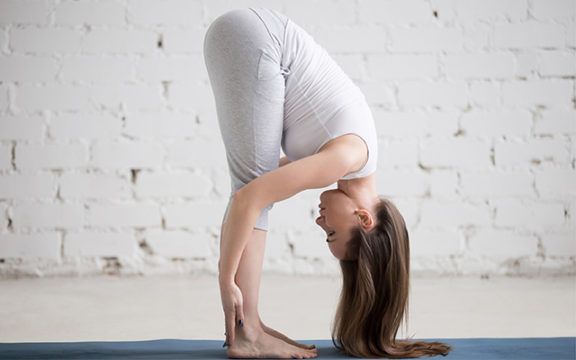
  Tight hamstrings and quads can lead to poor posture, lower back discomfort, and limited mobility. Pilates is excellent for lengthening and strengthening these muscles in a controlled, mindful way. Here are some effective  Pilates exercises  to target tight hamstrings and quadriceps: 🔹  For Tight Hamstrings: Hamstring Stretch on the Mat How:  Lie on your back, one leg extended on the mat, the other raised with a strap around your foot. Action:  Gently pull the raised leg toward you while keeping it straight. Hold for 30 seconds. Benefits:  Stretches the hamstrings while supporting the lower back. Leg Circles How:  Lie on your back with one leg extended up, the other on the mat. Action:  Circle the raised leg slowly in both directions. Benefits:  Loosens tight hamstrings while improving hip mobility. Standing Roll Down How:  Stand tall, slowly roll down vertebra by vertebra toward your toes. Action:  Let the arms and head hang...

Incorporating Cardio Into Your Pilates Session

Image
  Incorporating cardio into Pilates is a great way to boost your heart rate, improve endurance, and enhance overall fitness. Traditional Pilates focuses on strength, flexibility, and controlled movement, but adding some cardio elements can make the workout more dynamic. Here are a few ways to blend the two: 1.  Pilates with Jumping (Reformer Pilates) Reformer Pilates  machines often come with a jumpboard attachment, allowing you to add jumping exercises. Jumping on the Reformer engages your muscles while providing an excellent cardiovascular workout. Moves like jump squats or plyometric jumps can increase the intensity. 2.  Circuit Training Combine Pilates and Cardio Circuits : Create a circuit with Pilates exercises for strength (like the  Hundred ,  Plank , or  Roll-Up ) followed by high-intensity cardio bursts (like jumping jacks, mountain climbers, or burpees) to get your heart rate up. Alternate between the two for an effective workout. 3.  P...

Pelvic Floor Exercises

Image
Strengthening your pelvic floor is a great way to support your core and overall stability, as well as improve many areas in your life. If you are pregnant, have bowel and/or bladder control issues, back pain, sexual dysfunction, or more, here are some effective exercises: Kegels : Sit or lie down comfortably. Squeeze your pelvic floor muscles as if you're trying to stop the flow of urine. Hold for 5-10 seconds, then relax. Aim for 10-15 repetitions, 3 times a day. Bridge : Lie on your back with knees bent and feet flat on the floor. Lift your hips towards the ceiling while squeezing your glutes and pelvic floor. Hold for a few seconds, then lower. Repeat 10-15 times. Squats : Stand with feet shoulder-width apart. Lower your body as if sitting back into a chair, keeping your chest up. Squeeze your pelvic floor as you come back up. Do 10-15 repetitions. Bird Dog : Start on all fours, with hands under shoulders and knees under hips. Extend one arm forward and the opposite leg back whi...

7 Pilates Benefits You Don't Want To Sleep On

Image
7 Pilates Benefits You Don't Want To Sleep On By  LAUREL LEICHT There's a reason it's called the "one-and-done" workout. Pilates is all about slow, controlled movements—but its fitness and health rewards are supercharged. Whether you go for a class on a mat, using gravity for resistance, one on a reformer (a flat, bed-like machine with muscle-strengthening springs), or a more contemporary variation with equipment like spring-loaded chairs and larger Megaformers , you’ll walk away with feel-better benefits on day one. Whatever way you get your Pilates fix, read on for seven great results you’ll take away. Then go hit the studio ASAP. It tones your muscles - While people often say Pilates leaves you with “long, lean muscles,” technically all muscle is lean mass. But the workout does strengthen and stretch your limbs in one go. “Oftentimes, people feel that their body has been compressed, tense, and tight beforehand but leave the studio feeling more loose and more ...

Top 10 Benefits of Pilates

Image
  Pilates is a low-impact workout effective at strengthening, lengthening, and toning your muscles through controlled, repetitive movements. There are many advantages to incorporating Pilates into your workout routine from increased strength to improved posture. Read on to discover some of the biggest benefits. 1. Pilates Is Whole-Body Fitness Pilates trains the body as an integrated whole, focusing on core, lower body, and upper body strength as well as flexibility and posture. Pilates workouts promote strength, balanced muscle development, flexibility, and increased range of motion for the joints. Attention to core support and full-body fitness, including the breath and the mind, provide a level of integrative fitness that is hard to find elsewhere. It is also a reason that Pilates is popular in rehab settings, as well as with athletes who find that Pilates is a great foundation for any kind of movement they do.  2. Pilates Is For Everyone Whether you are an older ...